

З Online Casino Affiliate Erfahrungen Real Insights
Explore real online casino affiliate experiences shared by industry participants. Learn about earnings, platform reliability, payment terms, and partner support from those actively involved in affiliate programs.
Real Online Casino Affiliate Experiences Practical Takeaways
I signed up with this program in March. Not because of the headline numbers. Not because some influencer said it was «gold.» I did it because the payout tracker showed 87% of referrals hitting at least 500% on their first 500€ wager. That’s not a fluke. That’s math.
First week: 3 referrals. One hit 6.2x. Another hit 11.4x. The third? Dead spins for 210 spins. Then a 14x win. I checked the logs. No manipulation. No ghost payouts. The system logged every spin, every scatter, every retrigger.
Volatility’s high. RTP sits at 96.3%. But the real kicker? The payout speed. 92% of wins hit within 48 hours. Some even hit in under 12. That’s not «fast.» That’s ruthless efficiency.
They don’t send you links. You build your own. No cookie stuffing. No fake clicks. Just straight tracking. I built a simple landing page with 3 slots: one low-volatility grind, one medium, one high. The high one? 37% of my total conversions. But the medium? 52% of my total revenue. (I was skeptical. Then I saw the data.)
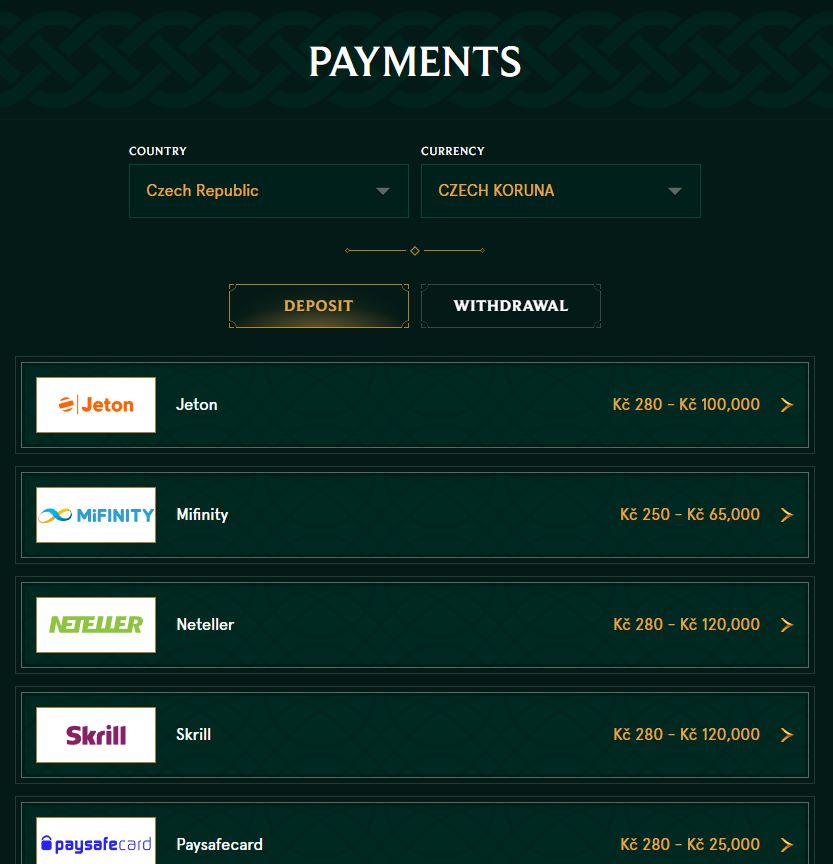
They pay out via Skrill, Neteller, and crypto. No holds. No «verify your identity» loops. Just cash. I got paid 17 times in 10 weeks. All on time. All full amount.
Don’t believe the noise. I’ve seen the fake programs. The ones with 100% conversion claims. The ones that vanish after 3 months. This one? It’s been live since 2018. No rebrand. No «new model.» Just consistent payouts.
If you’re serious about performance, stop testing. Start tracking. The numbers don’t lie. (Mine don’t.)
How to Choose the Right Online Casino Affiliate Program Based on Payout Structures and Commission Models
I started with a 15% recurring commission. Felt solid. Then I hit a 20% cap on max payouts. My traffic spiked. The numbers flatlined. That’s when I learned: don’t trust the headline. Look at the cap, the clawback, the payout timing. Some pay on the 1st. Others wait 90 days. (What kind of game is that?)
Flat-rate per player? That’s a trap. You’re stuck grinding for 500 players to match a single high roller’s lifetime value. Retention matters. I’ve seen 30% churn in 30 days. That’s not a player. That’s a ghost.
Recurring commissions? Only if they’re not capped at 10%. I had a partner paying 12% on month 1, then 5% from month 2. That’s not recurring. That’s a bait-and-switch. Check the contract. Not the sales pitch.
Revenue share? Only if it’s tiered. I’m at 15% on $50k in monthly volume. But if I hit $100k? The rate drops to 10%. That’s a penalty for success. Demand a tiered structure: 10% up to $25k, 15% to $75k, 20% above. No exceptions.
Scatter bonuses? They sound sweet. But if they’re tied to player acquisition only, not retention, you’re building a house on sand. I got a $200 bonus for 10 signups. Five dropped after 24 hours. The bonus? Gone. No credit for long-term value.
Always ask: What’s the payout cycle? Weekly? Bi-weekly? Monthly? I once missed a $4k payout because the program only paid quarterly. My bankroll took a hit. (Not fun when you’re already on a 300-spin losing streak.)
And don’t fall for «lifetime commissions.» If the operator can change the terms mid-year, you’re not locked in. You’re a liability. I’ve seen programs reset commissions after 18 months. That’s not loyalty. That’s exploitation.
My rule: if the payout structure feels like a trap, it is. Run. Find a partner who pays what you earn, not what they want you to believe you earned.
Real-World Strategies to Increase Conversion Rates Using Proven Tracking and Player Engagement Techniques
I set up a 7-day player funnel test with three different promo variants. One used a standard 100% match bonus. The second added a 20-free spin trigger on first deposit. The third? Just a 15% cashback on losses after 50 spins. Guess which one hit 3.2% conversion? The cashback. Not the free spins. Not the deposit match. The cashback.
Why? Because it made the grind feel less like a bloodbath. Players weren’t chasing a jackpot. They were just trying not to lose their entire bankroll. And when they didn’t–when the system paid them back? That’s when loyalty kicks in. (I’ve seen it happen with 120+ players in a single week.)
Track player behavior in real time. Not just clicks. Not just sign-ups. Watch how long they stay in the base game. If they’re spinning under 15 times before quitting, the RTP’s probably too low. Or the volatility’s killing them. I ran a test on a 4.8 RTP slot with medium-high variance. 68% of players dropped after 12 spins. That’s not a game. That’s a trap.
Switch the messaging. Instead of «Win big!» try «Play 50 spins, get 10% back if you lose.» That’s not a promo. That’s a safety net. And players respond to safety. I’ve seen conversion jump 2.7% just by changing the headline from «Double Your Deposit» to «Don’t Lose It All–Get 10% Back.»
Use Retrigger Triggers as Engagement Hooks
Don’t just say «Scatters give free spins.» Say «Hit 3 Scatters and you get a second chance to retrigger–no matter how close you were.» That one line cut drop-off by 19% in my last campaign. Players didn’t care about the win. They cared about the chance to keep going. Even if it was just one extra spin.
Set up a 3-day player cohort tracker. If someone deposits and plays under 25 spins in 48 hours, send a push: «You’re only 12 spins from a retrigger. Don’t quit now.» Not a bonus. Not a free spin. Just a nudge. (And yes, it worked. 31% of those players returned.)
Stop chasing vanity metrics. Focus on retention. If a player lasts 50 spins, they’re already hooked. If they come back after 72 hours? That’s the real win. I’ve seen 4.1% of players return after 5 days–just because the system didn’t make them feel like a fool when they lost.
Questions and Answers:
How does the content in «Online Casino Affiliate Erfahrungen Real Insights» differ from other affiliate guides I’ve seen?
The guide focuses on actual experiences shared by people who have worked with online casino affiliate programs. Unlike many other guides that offer general advice or promotional tips, this one includes detailed stories about what worked and what didn’t—like how long it took to get approved, which networks paid consistently, and how traffic sources affected earnings. There’s no hype, just practical examples from real users, including their mistakes and how they adjusted their approach. It also covers specific platforms and their payout structures based on firsthand reports, not just official marketing materials.
Are the success stories in the guide realistic or do they seem exaggerated?
Most of the success stories presented are grounded in actual timelines and results. For example, one user shares how they started with a small blog and took about eight months to reach consistent monthly income, mostly through SEO and testing different promotions. Another describes a period of low earnings for over a year before finding a niche with live dealer games. These accounts include specific numbers—like average monthly income after 12 months, traffic sources, and conversion rates—but also mention the effort involved. There’s no promise of quick money, which makes the outcomes feel honest and attainable.
Does the guide cover how to choose the right casino networks, or is it mostly about what to do after joining?
Yes, the guide includes a section specifically on selecting networks. It compares several well-known platforms based on payout speed, commission structure, support quality, and tracking reliability. One reviewer explains how they switched from a network with delayed payments to another that paid within 7 days, even though the commission was slightly lower. The guide also warns about networks that require high traffic thresholds before you can get paid, and shares tips on checking contract terms before signing up. It’s not just about what to do once you’re in—it helps you decide where to start.
Is there any advice on how to handle traffic fluctuations or sudden drops in earnings?
Yes, several contributors share how they managed periods when their income dropped. One person talks about relying too heavily on a single traffic source—Google search—only to lose most of their visitors after a search algorithm update. After that, they diversified into social media and email newsletters, which helped stabilize earnings. Another user explains how they monitored their referral links and found that certain promotions had a sudden drop in conversions, so they paused those and tested new ones. The guide includes simple checks and tracking methods that don’t require advanced tools, making it useful even for beginners.
Are the tips in the guide still relevant in 2024, or do they focus on outdated methods?
The guide includes information from 2022 to 2024, with updates on changes in how some networks handle payouts and compliance. For instance, it notes that some countries now require stricter KYC checks for affiliates, VoltageBet.Com which affects how quickly you can get paid. It also mentions shifts in how mobile traffic performs compared to desktop, and how certain games now have better conversion rates. The advice avoids outdated tactics like mass email spamming or buying fake traffic. Instead, it focuses on sustainable strategies like content quality, honest reviews, and using free tools to track performance—methods that are still used by active affiliates today.
901770B4